
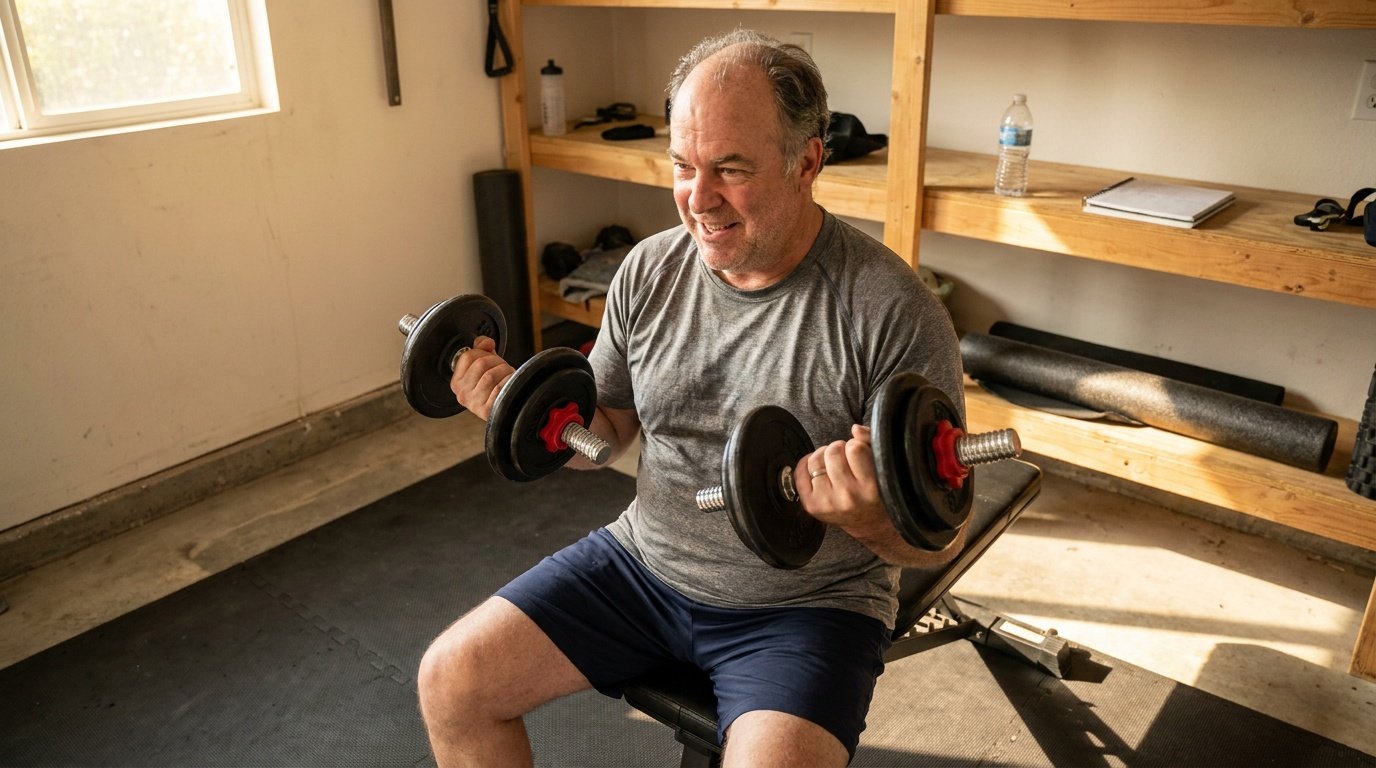
Strength training still gets treated like a lifestyle preference instead of a clinical intervention. That is the biggest miss I see. Early in my career I thought of it as something you prescribed once someone was already motivated. Experience corrected that. The patients who do best are the ones we get under a bar, literally or figuratively, before they feel ready.
Why Your Muscular System May Be the Most Important Organ You’re Ignoring
Some people call your muscular system one of the most important organs in the body. That’s not a stretch. It touches nearly every health outcome we track — energy, blood pressure, diabetes, stroke recovery, and even how well you run a marathon.
Whether you’re recovering from a stroke or training for a race, your strength plays a tremendous impact on your performance. The benefits of strength training reach further than most people expect.
And here’s the part that matters most: you have complete control over your muscles’ function and their ability to do their job.
Inactive adults lose 3% to 8% of their muscle mass every decade, according to a PubMed review titled “Resistance Training Is Medicine.” Most people don’t notice that loss until something stops working the way it used to.
I think of a patient in his late 60s who came to me after a fall, convinced his balance problem was a balance problem. It wasn’t. It was years of unaddressed strength loss that nobody had named out loud. I went in expecting to talk about proprioception. We ended up talking about why he’d quietly stopped carrying his own groceries. That conversation changed how I open every strength discussion now. I lead with what they’ve already given up, not with the number.
From working to lose weight, to addressing high blood pressure or diabetes, strengthening can play a major role in improvement. That’s not a fitness claim. That’s a health one.
The Science-Backed Benefits of Strength Training You Need to Know
Stronger Muscles and Better Bone Density
Strength training builds muscle. That part most people know. What they don’t always know is that it builds bone too.
Research shows resistance training is associated with a 1% to 3% increase in bone mineral density. That matters a lot when you’re thinking about falls, fractures, and staying functional as you get older.
Stronger bones and stronger muscles mean you move better, catch yourself when you stumble, and stay independent longer.
Improved Metabolism and Weight Management
Muscle burns calories at rest. More muscle means a higher resting metabolic rate, which means your body is doing more work even when you’re not.
A PubMed review found that 10 weeks of resistance training may increase lean weight by 1.4 kg, increase resting metabolic rate by 7%, and reduce fat weight by 1.8 kg. Those numbers come from real training programs, not extreme interventions.
That’s the compounding advantage of strength. The more you build, the more your body works for you around the clock.
Lower Risk of Heart Disease, Cancer, and Premature Death
Harvard T.H. Chan School of Public Health reports that 30 to 60 minutes per week of strength training was associated with a 10% to 20% lower risk of dying during the study period from all causes, cancer, and heart disease compared with doing no strength training at all.
That’s less than one lunch break per week. The minimum effective dose is smaller than most people assume.
WebMD also cites research showing that one hour per week of weight training may cut the chances of a heart attack or stroke by up to 70%.
The dose is low. The return is not.
Chronic Disease Management — Diabetes, Arthritis, Depression, and More
The Mayo Clinic connects strength training directly to support for arthritis, heart disease, depression, and diabetes. Better Health Victoria adds improved sleep and better self-esteem to that list.
Strength training isn’t just for people who want to look different. It’s for people managing real health conditions who need a tool that actually moves the needle.
If you’re working on high blood pressure or blood sugar, strength training belongs in the plan.
Better Balance, Joint Protection, and Lower Injury Risk
Brown University Health points to joint protection and better balance as key benefits of strength training. Stronger muscles take load off your joints. That means less pain and less wear over time.
A lot of people avoid strength training because they’re worried about getting hurt. The research points the other way. Strength training done consistently reduces injury risk. It doesn’t create it.
The muscles around your knees, hips, and shoulders are what keep those joints stable. Training them is how you protect them.
This is really about restoring a sense of agency over something that feels like it’s slipping away with age. The numbers matter, but no patient changes behavior because of a percentage. They change because they can name what they’re afraid of losing next.
How Strength Training Works — Progressive Overload Explained
Strength comes from progressive activity that challenges your muscles over time. You complete a resistance movement, like standing up repeatedly, and then progress to more repetitions or add weight to improve the endurance and strength of your muscles.
That process is called progressive overload. It lets your muscles get challenged, recover, and come back stronger for the next session. That’s the whole mechanism. It’s not complicated, but it does require consistency.
One session helps. But your muscles need continued repetitions over time to produce the long-term health impact you’re looking for.
The work you put in adds up. That’s not motivational language. That’s how muscle physiology works.
How Often Should You Strength Train? A Simple Framework
A New Mexico State University publication recommends training each muscle group 2 to 3 times per week. Whole-body sessions should happen at least 2 times per week. Between sessions, your muscles need 48 to 72 hours of rest to recover properly.
That’s the framework. Two to three sessions per week, spaced out, with real recovery in between. It’s not a heavy lift in terms of time. Most people can fit this in.
The harder question isn’t how often. It’s what’s actually getting in the way of doing it consistently.
It often works well to start with the question: What does a first step look like for you for adding more physical activity into your life?
How to Keep Strength Training Consistent in Your Life
The hardest part about strength training is figuring out how to keep it consistent in your life. One session is helpful, but it’s not enough. Your muscles need continued repetitions over time to have the long-term impact on your health.
Scheduling it like an appointment helps. Habit stacking — attaching a training session to something you already do — helps too. And you don’t need a gym. There are low-cost, effective strength training exercises you can do at home with your own body weight.
The best part about your muscles is that you have complete control over their function and their ability to do their job. That’s not true of every health factor. This one, you own.
You also have the ability to maintain and improve your strength as you age. That window doesn’t close. It just requires you to show up for it.
Strength training has a tremendous impact on your energy, your health, and your overall life satisfaction. The compound effect of consistent training over months and years is real, and it’s available to anyone willing to start.
Start With an Honest Look at Where You Are
How often do you strength train right now? If it’s less than 2 to 3 times a week, that’s the gap worth closing.
You don’t need a perfect program on day one. You need a realistic plan that fits your actual life. That’s what makes the difference between knowing the benefits of strength training and actually getting them.
A good starting point is an honest audit of your current health habits — where you’re consistent, where you’re not, and what’s actually getting in the way.
The Daily Health Audit is a free tool built to help you do exactly that. It surfaces what’s working, what’s missing, and where strength training fits into your bigger health picture.
Most people already know strength training matters. That was never the gap. The gap is between knowing and doing, and it does not close with more information. It closes with a plan small enough to survive contact with a real week.
Take the Free Daily Health Audit
Strength training is one of the highest-return health habits available to you. The research is clear. The dose is manageable. The question is whether your current routine reflects that.
Take the free Daily Health Audit from The Public Wellness Project. It takes just a few minutes and gives you a real picture of where your health habits stand today — including how much strength training you’re actually getting each week.
Start there. Build from what you find.