
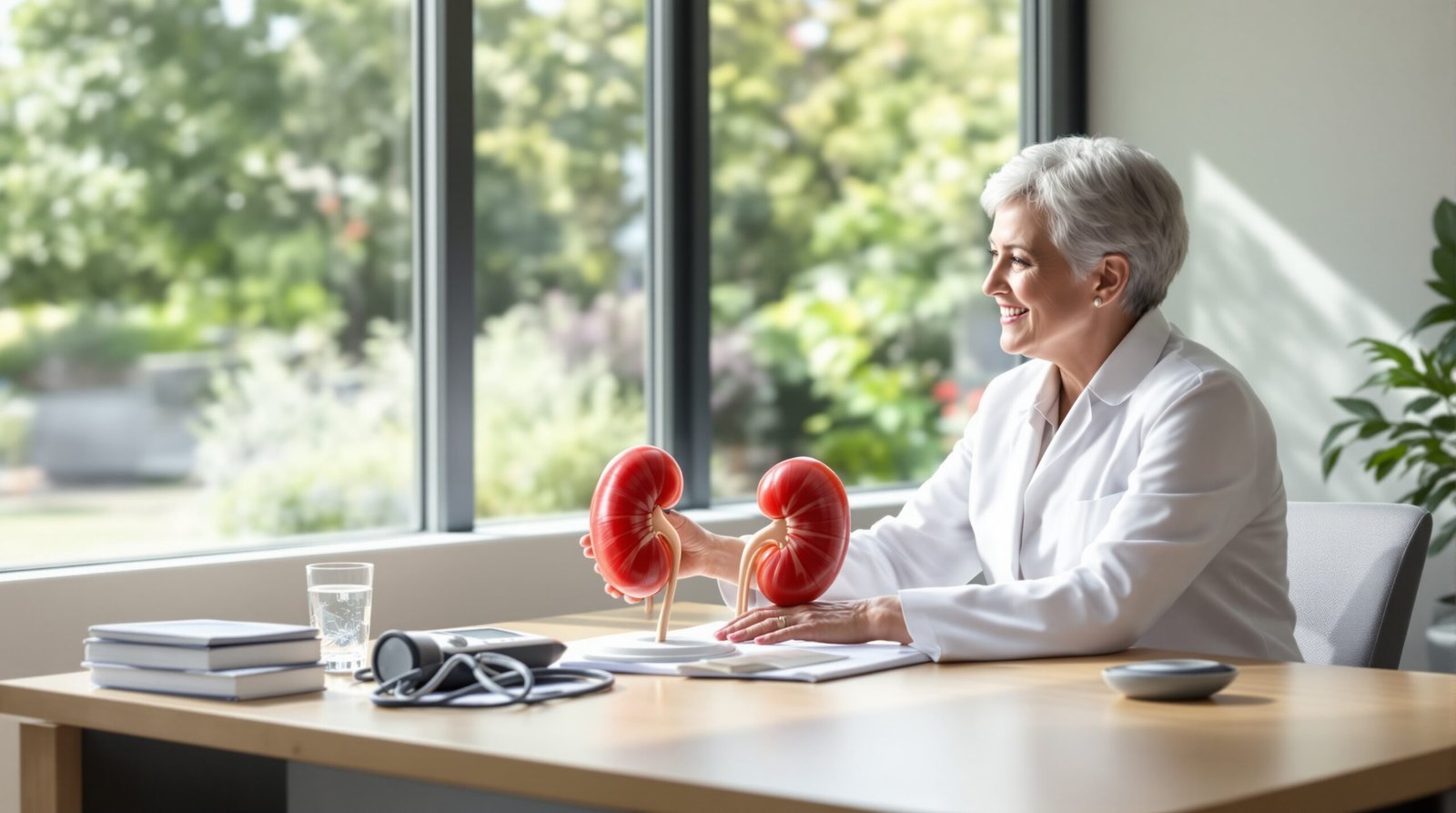
- Learning how to improve health of kidneys requires targeting four systemic functions simultaneously: blood pressure regulation, bone health, red blood cell production, and vitamin D activation.
- Hydration, sodium reduction, blood sugar control, and eliminating nephrotoxic medications are the highest-leverage daily interventions for preserving kidney filtration capacity.
- Consistent moderate exercise , targeting at least 150 minutes per week , reduces systemic inflammation, lowers blood pressure, and improves insulin sensitivity to directly protect nephron units.
- Tracking biomarkers including eGFR, serum creatinine, blood pressure, and urine albumin-to-creatinine ratio gives you a data-driven window into kidney health before symptoms ever surface.
- Chronic stress accelerates kidney decline through sustained hypertension, hormonal dysregulation, and inflammation , making structured stress management a non-negotiable clinical priority.
[Table of Contents]
Understanding how to improve health of kidneys starts with one foundational truth: like many other organs in your body, your kidneys benefit from consistency , consistency with hydration, nutrition, and sodium/electrolyte management.
Let’s get real about kidney health. While most advice stops at “drink more water,” I’m here to share what actually works, based on both clinical research and real-world results with my patients. Your kidneys filter about 150 quarts of blood daily , that’s like cleaning an entire swimming pool of blood every 24 hours.
What Most People Get Wrong About How to Improve the Health of Kidneys
Kidneys fail silently because most people optimize for symptoms rather than the four systemic functions kidneys control daily: blood pressure regulation, bone health maintenance, red blood cell production, and vitamin D activation. Your kidneys don’t just filter blood , they’re central command for each of these processes, and the gap between healthy lifestyle foundations and real life is exactly where chronic damage accumulates unnoticed.
Your kidney function, like many other organs in the body, revolves around your habits and routines. I remember when I was a kid and checked out the Body World Exhibit, the impact of habits such as smoking or poor diet on your internal organs was astonishing. It’s not about one single event, it’s about how you treat your body on a daily basis.
Your 7-Step Plan to Improve Kidney Function Naturally
Sustained improvements in kidney function emerge from reducing glomerular filtration pressure, lowering systemic inflammation, and eliminating nephrotoxic inputs simultaneously , not from any single dietary swap or supplement. According to the CDC’s action steps for preventing and managing Chronic Kidney Disease, combining weight management, regular exercise, smoking cessation, and salt reduction creates compounding protective effects that no single intervention can replicate. If you’ve been told your GFR is declining or your creatinine is creeping up, the steps below give you a concrete, clinically grounded framework to act on starting today.
1. Get Smart About Hydration for Kidney Health
Forget the “8 glasses a day” rule. Research from Mount Elizabeth Hospital highlights that optimal kidney hydration targets 1.5 to 2 liters daily, adjusted for body weight, activity level, and climate , not a blanket volume prescription. Instead:
2. Use Physical Activity to Support Kidney Function
Regular physical activity directly enhances renal perfusion, reduces systemic inflammation, and stabilizes blood pressure through cardiovascular adaptation , all of which reduce the filtration burden placed on nephron units. These compounding benefits make consistent movement one of the most accessible, non-pharmacological tools for preserving long-term kidney function. The NHS treatment guidelines for kidney disease recommend 150 minutes of weekly exercise alongside salt restriction and smoking cessation as the core lifestyle pillars for slowing disease progression. For a deeper breakdown of how movement protects renal physiology, see this physical therapist’s kidney protection guide.
3. Know Your Risk Factors and Kidney Health Numbers
Four measurable biomarkers govern kidney filtration integrity, vascular load tolerance, and metabolic stress thresholds simultaneously. Tracking these numbers gives you a precise, data-driven window into your kidney function before symptoms ever surface. Harvard Health’s kidney health quick-start guide recommends keeping sodium below 2,300mg daily, controlling blood pressure, and exercising at least 150 minutes weekly as the primary measurable targets for protecting filtration capacity long-term.
4. Eat for Your Stage of Kidney Health
Recent research shows that a balanced diet providing five or more daily fruit and vegetable portions, low saturated fat, and restricted salt and sugar intake forms the nutritional foundation for preventing kidney disease progression at every stage. The National Kidney Foundation’s 6-step protection protocol further specifies cholesterol monitoring and alcohol moderation as dietary levers that work in tandem with food quality choices. Your nutrition and lifestyle habits interact directly with how hard your kidneys have to work every single day.
5. Manage Medication Impact on Kidney Function
Nephrotoxic medications reduce kidney function by triggering direct tubular injury, hemodynamic disruption, or interstitial inflammation , damaging filtration capacity in ways that compound over time with repeated exposure. Common medications carry well-documented risks that every patient managing kidney health must actively track and discuss with their care team. Harvard Medical School advises that patients with weakened kidneys should exercise particular caution with NSAIDs and use ACE inhibitors or ARBs under physician supervision to protect remaining filtration function. Understanding how medication adherence factors interact with kidney outcomes is equally critical for long-term management.
Common medications that can affect kidneys:
6. How to Manage Stress to Protect Kidney Health
Chronic stress damages kidney function by triggering sustained hypertension, systemic inflammation, and hormonal dysregulation that collectively accelerate nephron deterioration. Understanding these three pathways gives you a direct clinical map for protecting your kidneys through targeted stress and emotional well-being management.
7. Build Daily Recovery Habits That Support Kidney Function
Build in daily practices:
How to Improve Kidney Function Naturally in Real Life
Consistent, incremental lifestyle changes drive measurable improvements in kidney filtration capacity by reducing the cumulative inflammatory and metabolic load those organs process daily. The gap between knowing and doing is where most kidney health plans fail. Start with our Daily Health Audit to establish your baseline, then build habits gradually. Michigan Urology confirms that combining exercise, weight control, hydration, and cholesterol monitoring produces the most durable kidney function improvements available outside of pharmaceutical intervention.
Remember: Your kidneys work 24/7. They don’t get weekends off or vacation days. Every small step you take to protect them matters.
Your Next Steps: When to See a Doctor for Your Kidney Health
Protecting long-term kidney function requires acting on measurable health data before silent damage accumulates. Your kidneys are working hard for you right now. Let’s make sure you’re working just as hard to protect them.
Technical Deep-Dive & Clinical FAQs
What is the clinical relationship between eGFR decline rate and lifestyle intervention effectiveness, and at what stage does lifestyle change still meaningfully slow CKD progression?
eGFR (estimated glomerular filtration rate) declines at an average rate of 1 to 2 mL/min/1.73m² per year in healthy aging, but in unmanaged CKD this rate accelerates to 4 to 8 mL/min/1.73m² annually depending on the underlying etiology, comorbidity burden, and dietary inputs. Lifestyle interventions targeting blood pressure control below 130/80 mmHg, sodium restriction under 2,300 mg/day, and aerobic exercise at 150 minutes per week have been shown in prospective cohort data to attenuate this decline rate by 30 to 50 percent across CKD stages 1 through 3b.
Stage 3a (eGFR 45, 59) and 3b (eGFR 30, 44) represent the most clinically actionable windows where lifestyle modification produces measurable nephroprotective effects before irreversible fibrotic remodeling dominates the histological picture. Beyond stage 4 (eGFR below 30), lifestyle changes remain important for cardiovascular risk reduction and quality of life preservation, but their capacity to meaningfully restore filtration units is substantially limited by the degree of existing nephron loss and interstitial scarring.
How do NSAIDs specifically damage kidney filtration architecture at the cellular level, and what are the safest evidence-based alternatives for pain management in patients with compromised kidney function?
NSAIDs inhibit cyclooxygenase-1 and cyclooxygenase-2 enzymes, suppressing prostaglandin synthesis in the renal vasculature and eliminating the prostaglandin-mediated afferent arteriolar dilation that maintains glomerular perfusion pressure under physiological stress conditions. This hemodynamic disruption causes acute reductions in GFR, particularly in volume-depleted states, and with chronic use promotes interstitial nephritis, papillary necrosis, and progressive tubular atrophy through sustained ischemic injury to the nephron microenvironment.
Evidence-based alternatives for patients with CKD stages 2 through 4 include acetaminophen at doses not exceeding 2,000 mg/day as a first-line analgesic, topical diclofenac gel for localized musculoskeletal pain with minimal systemic absorption, and physical therapy modalities including therapeutic exercise, manual therapy, and neuromuscular re-education as non-pharmacological pain management frameworks that carry zero nephrotoxic risk profile. Opioid analgesics require renal dose adjustment and carry significant dependency risk, making structured physical rehabilitation the most clinically sustainable long-term pain management strategy for this patient population.
What is the precise physiological mechanism by which chronic psychological stress accelerates kidney function decline, and which stress reduction interventions have the strongest clinical evidence for renal protection?
Chronic psychological stress activates the hypothalamic-pituitary-adrenal axis, producing sustained cortisol elevation that drives systemic hypertension through increased renal sodium reabsorption, upregulated renin-angiotensin-aldosterone system activity, and endothelial dysfunction across the glomerular capillary bed , each mechanism independently compressing the filtration surface area available for waste clearance. Simultaneously, sympathetic nervous system activation during chronic stress reduces renal blood flow by 20 to 40 percent through catecholamine-mediated vasoconstriction, creating ischemic microenvironments within the nephron that accelerate oxidative damage and pro-fibrotic signaling cascades.
Mindfulness-based stress reduction programs have demonstrated statistically significant reductions in systolic blood pressure of 4 to 8 mmHg in randomized controlled trials, translating directly into reduced intraglomerular pressure and slower eGFR decline in hypertensive CKD populations. Structured aerobic exercise at moderate intensity (50 to 70 percent of maximum heart rate) has the strongest combined evidence base for simultaneously reducing cortisol burden, lowering inflammatory cytokine profiles including IL-6 and TNF-alpha, and improving endothelial nitric oxide bioavailability , making it the single highest-yield stress-reduction intervention available for patients seeking to protect kidney function through behavioral means.